

Have you ever seen “PTO” in a work email, employee handbook, or text message and wondered what it means? The abbreviation PTO is widely used in workplaces, schools, and online conversations.
While its most common meaning is “Paid Time Off,” it can also stand for “Please Turn Over” on printed documents or refer to Parent-Teacher Organization in schools. Understanding the context will help you know which meaning is intended.
PTO most commonly means Paid Time Off, a workplace benefit that allows employees to take leave while continuing to receive their regular pay.
However, depending on the situation, it can have other meanings.
Quick Answer
PTO most commonly means “Paid Time Off,” allowing employees to take vacation, personal days, or sick leave while still being paid. In other contexts, it can also mean “Please Turn Over” or “Parent-Teacher Organization.”
What Does PTO Mean?
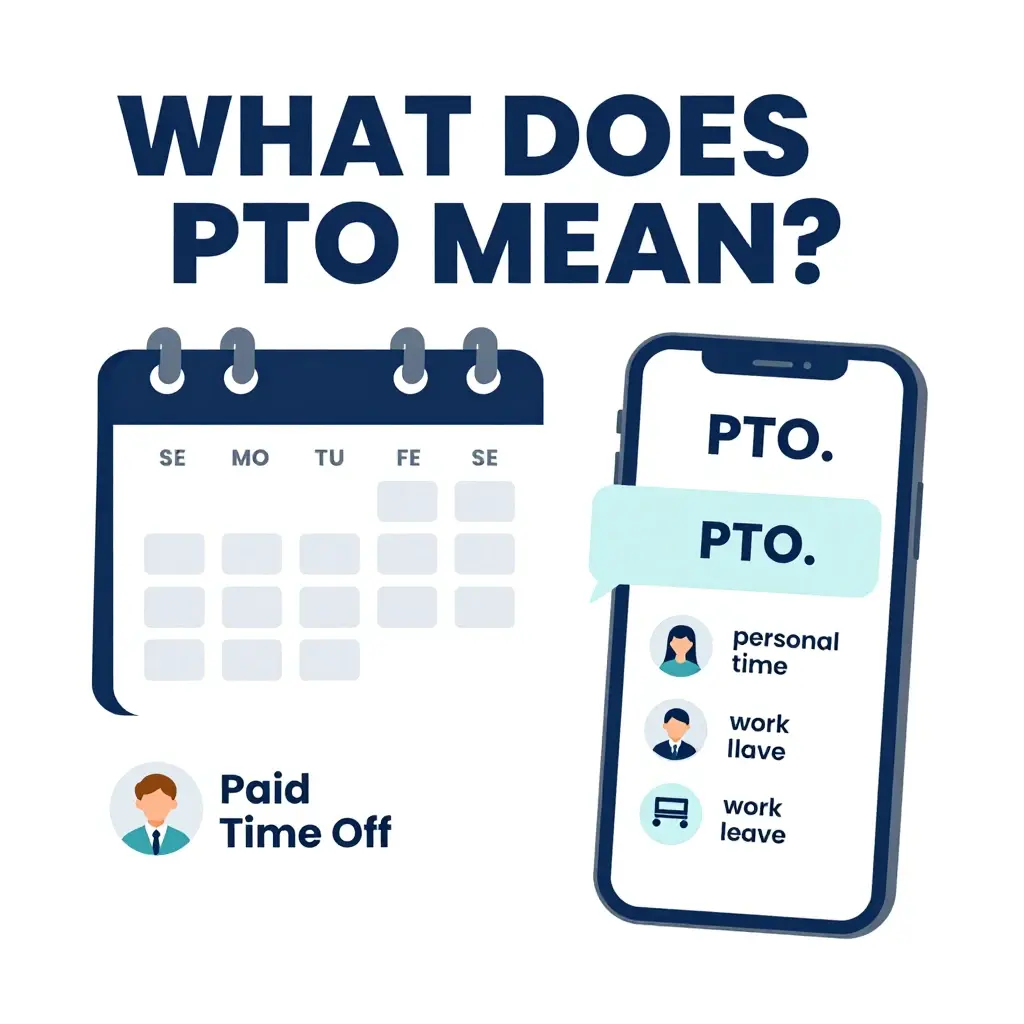
PTO is an abbreviation with several meanings, including:
- Paid Time Off (most common)
- Please Turn Over (on printed pages)
- Parent-Teacher Organization (school-related)
The correct meaning depends on where and how the abbreviation is used.
Examples
- “I’m taking PTO next week.”
- “PTO” (printed at the bottom of a page)
- “The PTO is organizing a school fundraiser.”
What Does PTO Mean at Work?
In the workplace, PTO almost always means Paid Time Off.
It is a benefit that allows employees to take time away from work while continuing to receive their normal salary.
PTO may be used for:
- Vacation
- Personal days
- Sick leave
- Family emergencies
- Medical appointments
Some employers combine all leave into one PTO balance, while others separate vacation and sick leave.
Examples
- “I requested three days of PTO for my vacation.”
- “She still has 10 PTO days remaining this year.”
What Does PTO Mean in Human Resources (HR)?
In HR, PTO refers to an employee’s available paid leave.
HR departments often track:
- PTO balance
- PTO requests
- PTO policies
- PTO accrual
Many companies allow employees to earn additional PTO based on their length of service.
What Does PTO Mean in Texting?
In text messages, PTO usually keeps its workplace meaning.
Examples
- “I’m on PTO today.”
- “Taking PTO next Friday.”
If the conversation is about work, Paid Time Off is almost always the intended meaning.
What Does PTO Mean in Love and Relationships?
Although PTO is not a relationship term, people may use it when discussing plans together.
Examples
- “I took PTO so we could travel together.”
- “He’s using PTO to spend time with family.”
Here, PTO simply refers to paid leave from work.
What Does PTO Mean in Slang?
PTO is not slang.
It is a standard abbreviation commonly used in workplaces and schools.
What Does PTO Mean on Social Media?
On platforms like LinkedIn, X (formerly Twitter), Facebook, TikTok, and Instagram, PTO usually refers to:
- Vacation leave
- Work-life balance
- Time off
- Company benefits
Examples:
- “Finally using my PTO!”
- “Remember to take your PTO—you’ve earned it.”
Professional accounts often encourage employees to use their paid leave for rest and well-being.
What Does PTO Mean in Schools?
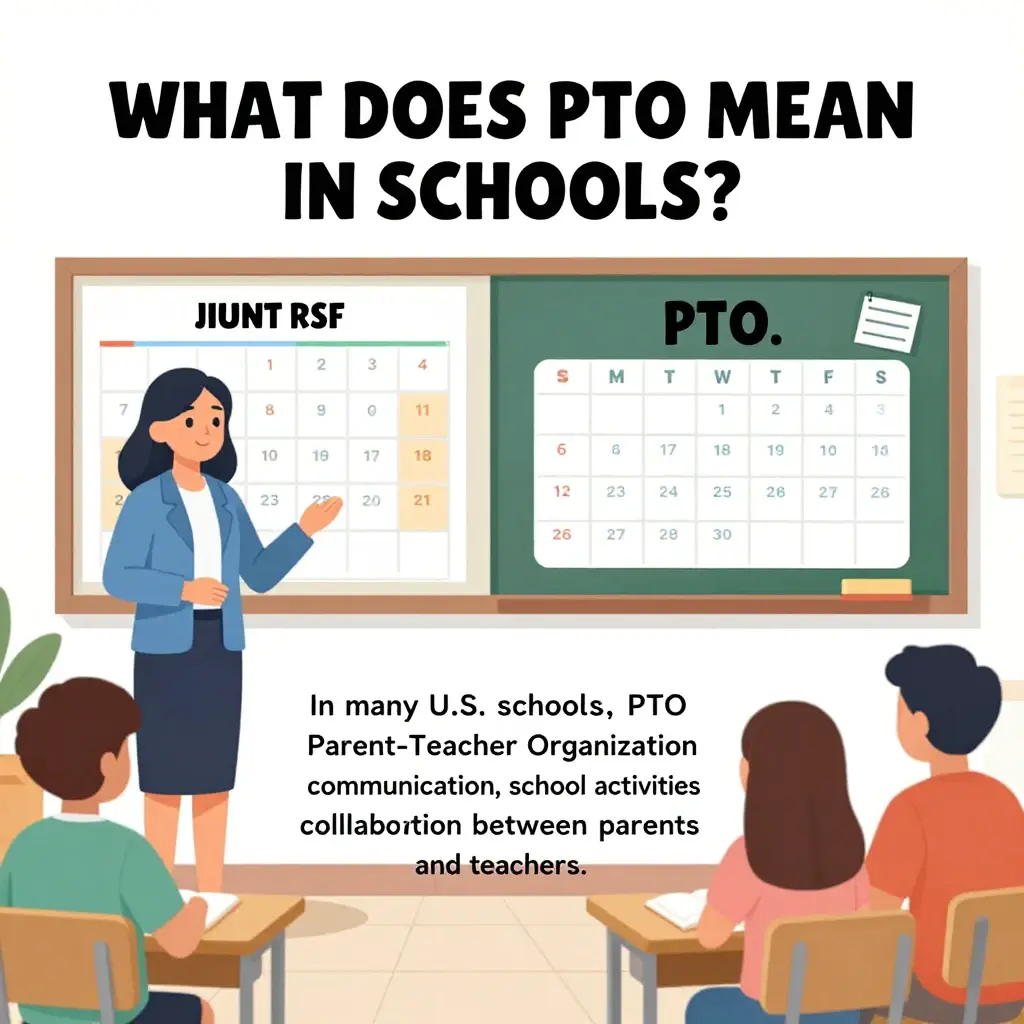
In education, PTO often stands for Parent-Teacher Organization.
A Parent-Teacher Organization:
- Supports school activities.
- Organizes fundraising events.
- Encourages parent involvement.
- Helps improve the school community.
Example
- “The PTO is meeting on Thursday evening.”
What Does PTO Mean on Documents?
Sometimes PTO appears at the bottom of a printed page.
In this context, it means:
Please Turn Over
It tells the reader that more information continues on the other side of the page.
Does PTO Have a Spiritual Meaning?
No.
PTO has no spiritual or religious meaning.
It is simply an abbreviation used in workplaces, schools, and documents.
Examples and Usage
Here are some examples of PTO in everyday English.
Workplace
“I’m taking PTO for a family vacation.”
HR
“Check your PTO balance before requesting leave.”
School
“The PTO organized a charity event.”
Printed Document
“The instructions continue—PTO.”
How Context Changes the Meaning of PTO
| Context | Meaning |
| Workplace | Paid Time Off |
| Human Resources | Employee leave benefits |
| School | Parent-Teacher Organization |
| Printed documents | Please Turn Over |
| Texting | Usually Paid Time Off |
The surrounding conversation makes the intended meaning clear.
Similar Workplace Abbreviations
Here are some common workplace abbreviations related to PTO:
| Abbreviation | Meaning |
| PTO | Paid Time Off |
| WFH | Work From Home |
| OOO | Out of Office |
| HR | Human Resources |
| EOD | End of Day |
| ETA | Estimated Time of Arrival |
These abbreviations are frequently used in professional communication.
How to Reply When Someone Says They’re on PTO
If someone says:
“I’m on PTO this week.”
You could reply:
- “Enjoy your time off!”
- “Have a great vacation!”
- “Hope you get some well-deserved rest.”
- “See you when you’re back!”
If PTO refers to a Parent-Teacher Organization, your response will depend on the school-related conversation.
Common Mistakes About PTO
Myth 1
PTO only means vacation.
False.
Paid Time Off may also cover sick leave, personal days, or other approved absences, depending on company policy.
Myth 2
PTO always means Paid Time Off.
False.
In schools, it often means Parent-Teacher Organization, and on printed documents, it can mean Please Turn Over.
Myth 3
PTO is used only in the United States.
False.
Although the term is especially common in the U.S., similar abbreviations and leave policies exist in many countries.
FAQs
Q1. What does PTO really mean?
A: PTO most commonly means Paid Time Off, allowing employees to take leave while continuing to receive their regular pay.
Q2. Is PTO positive or negative?
A: PTO is generally viewed as positive because it gives employees time away from work while maintaining their income.
Q3. Is PTO romantic?
A: No. It is not a romantic term, although someone may use PTO to spend time with a partner or family.
Q4. How should someone reply if a coworker says they’re on PTO?
A: You can reply, “Enjoy your break!”, “Have a great vacation!”, or “See you when you get back!”
Q5. Is PTO commonly used on social media?
A: Yes. It frequently appears in posts about vacations, work-life balance, employee benefits, and workplace culture.
Q6. How do you pronounce PTO?
A: It is usually pronounced by saying each letter individually: “Pee-Tee-Oh.”
Conclusion:
PTO most commonly means Paid Time Off, allowing employees to take paid leave for vacations, personal matters, or illness.
Depending on the context, it can also mean Parent-Teacher Organization in schools or Please Turn Over on printed documents. Paying attention to the situation will help you understand the intended meaning.
Now that you know the meaning of PTO, you’ll be able to use and interpret it confidently in workplace conversations, school discussions, text messages, and everyday communication.

Brandon Lewis researches modern vocabulary and semantic trends to create informative, reader-focused language guides.