
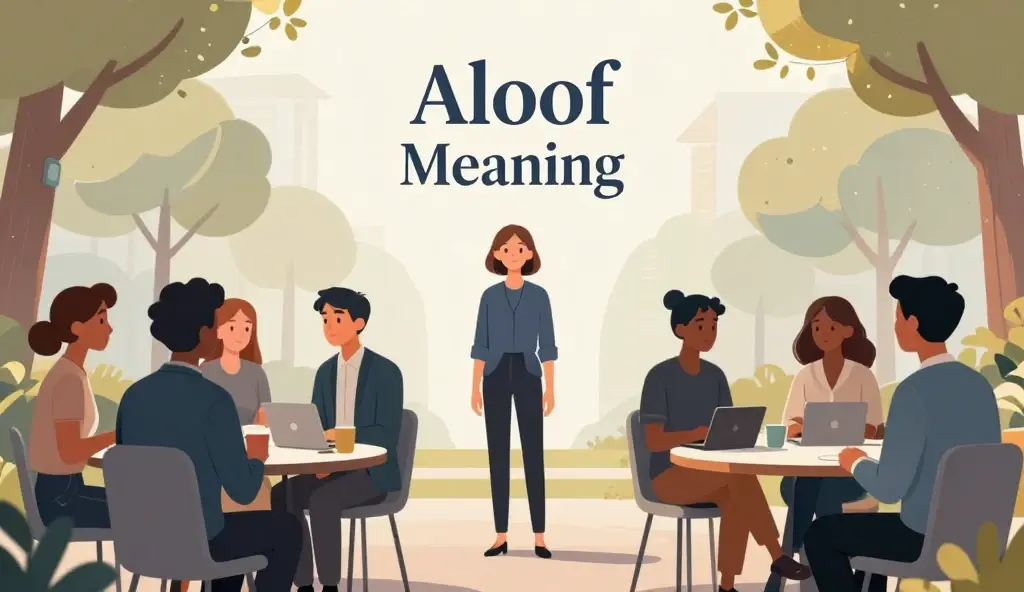
Have you ever heard someone described as “aloof” and wondered whether it is a compliment or an insult? The word aloof is often used to describe a person’s attitude, especially when someone seems distant, quiet, or emotionally separate from others.
It can describe a personality style, behavior, or even someone’s approach to relationships.
Aloof means being emotionally distant, reserved, or not showing much interest or involvement with other people.
An aloof person may appear calm and independent, but others may sometimes see them as cold or unfriendly.
Quick Answer
Aloof means distant, detached, or reserved.
It describes someone who keeps their emotions or thoughts private and may seem less interested in connecting with others.
What Does Aloof Mean?
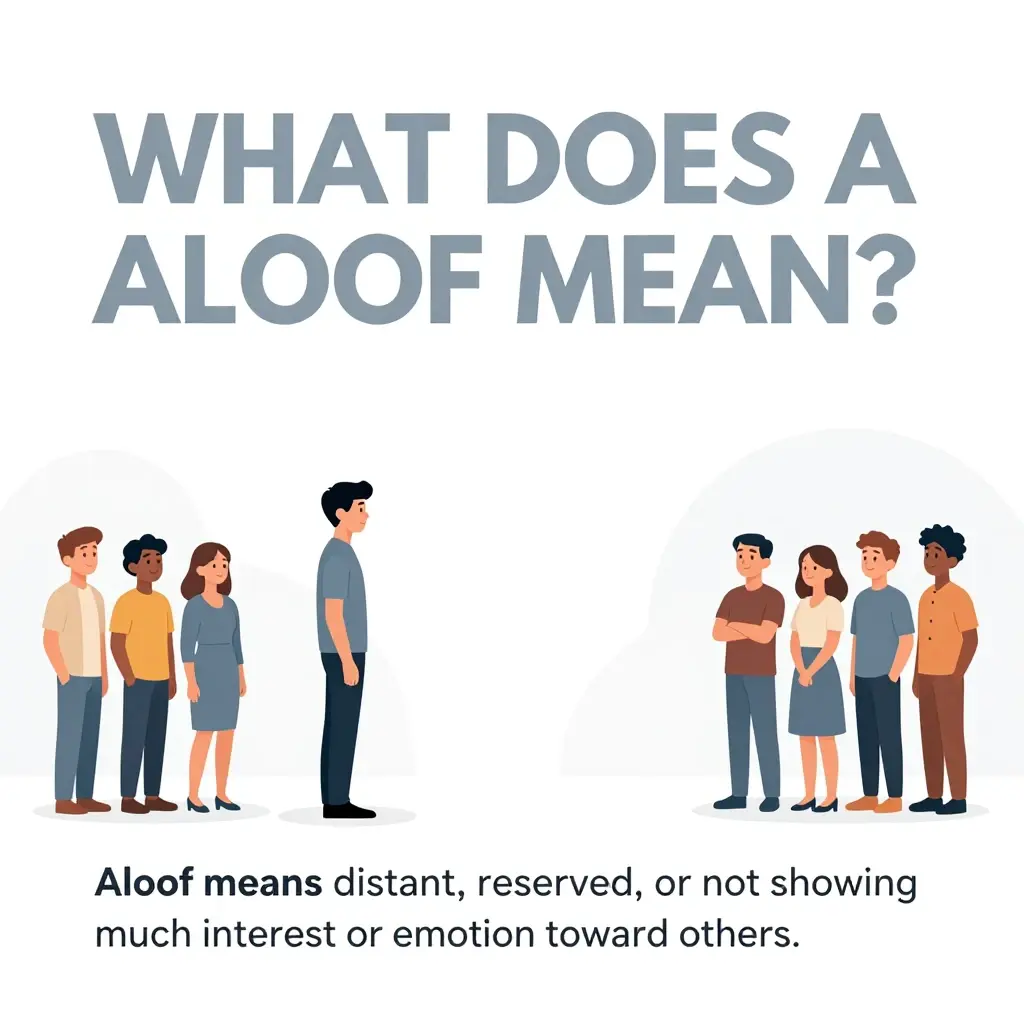
The word aloof describes someone who keeps a certain distance from people or situations.
An aloof person may:
- Avoid showing strong emotions.
- Prefer personal space.
- Stay quiet in social situations.
- Appear calm and independent.
- Keep others at a distance.
The word does not always mean someone is rude. Sometimes it simply describes a person who is naturally reserved.
Example:
“She seemed aloof at the party.”
Meaning:
“She appeared distant and did not interact much with others.”
What Does Aloof Mean as a Personality Trait?
When describing personality, aloof usually refers to someone who is emotionally reserved.
An aloof person may be:
- Independent.
- Private.
- Calm.
- Hard to read.
- Less expressive.
However, being aloof can be interpreted differently.
Positive interpretation:
- Confident.
- Self-controlled.
- Not easily influenced.
Negative interpretation:
- Cold.
- Unfriendly.
- Disconnected.
What Does Aloof Mean in Relationships?
In relationships, aloof often describes someone who seems emotionally unavailable or distant.
Examples:
- Taking a long time to open up.
- Avoiding emotional conversations.
- Not showing affection openly.
- Keeping personal feelings private.
Example:
“He has been acting aloof lately.”
Meaning:
“He seems distant or less emotionally connected.”
Being aloof does not always mean someone does not care; some people simply express emotions differently.
What Does Aloof Mean in Love?
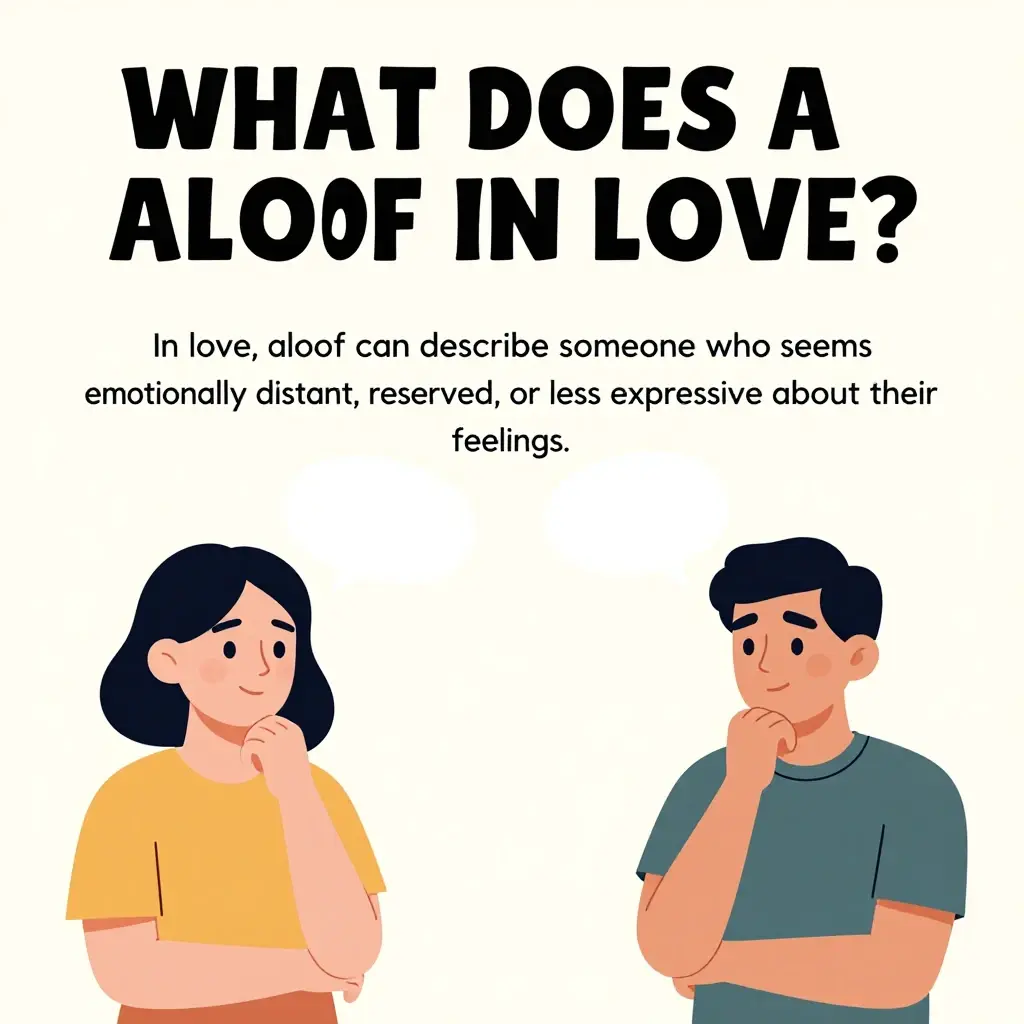
In romantic situations, aloof can describe someone who appears uninterested or difficult to understand.
For example:
- Someone who rarely texts first.
- Someone who hides their feelings.
- Someone who seems independent.
However, context matters. A person may appear aloof because they are:
- Shy.
- Nervous.
- Thoughtful.
- Busy.
What Does Aloof Mean in Texting?
In texting, aloof describes someone who gives short, distant, or less emotional replies.
Examples:
“Why are you being so aloof?”
Meaning:
“Why are you acting so distant?”
Signs someone may seem aloof in texting:
- One-word replies.
- Slow responses.
- Little emotional expression.
- Avoiding deeper conversations.
What Does Aloof Mean in Slang?
Aloof is not slang. It is a standard English word.
However, online users may use it casually to describe:
- A mysterious personality.
- Someone who acts “too cool.”
- Someone who keeps their distance.
Modern alternatives include:
- Distant.
- Cold.
- Detached.
- Unbothered.
- Reserved.
What Does Aloof Mean on Social Media?
On platforms like:
- TikTok
- Snapchat
- X (Twitter)
people often use aloof to describe:
- Quiet personalities.
- “Hard to read” people.
- Calm and independent behavior.
Examples:
- “That aloof energy is unmatched.”
- “He has an aloof personality.”
Sometimes social media uses the word positively to describe someone who seems confident and mysterious.
Does Aloof Have a Spiritual Meaning?
No.
Aloof does not have a specific spiritual meaning.
However, some people may connect aloof behavior with ideas like:
- Inner peace.
- Detachment.
- Emotional control.
These interpretations depend on personal beliefs.
Does Aloof Have a Cultural Meaning?
Yes, depending on cultural expectations.
Different cultures view reserved behavior differently.
In some cultures:
- Quietness may be seen as respectful.
- Privacy may be valued.
In others:
- Open communication may be considered more friendly.
The meaning of aloof behavior can change depending on social norms.
Examples and Usage
Example 1: Personality
“He is friendly but sometimes appears aloof.”
Meaning:
“He is kind but can seem distant.”
Example 2: Relationship
“She became aloof after the argument.”
Meaning:
“She became emotionally distant.
Example 3: Workplace
“The manager seemed aloof during the meeting.”
Meaning:
“The manager appeared detached or less engaged.”
Example 4: Social Media
“Her aloof style makes her seem mysterious.”
Meaning:
“Her distant style creates a mysterious impression.”
How Context Changes the Meaning of Aloof
| Context | Meaning |
| Personality | Reserved or distant |
| Relationships | Emotionally unavailable or less expressive |
| Texting | Short or detached communication |
| Social media | Mysterious or independent style |
| Workplace | Less engaged or distant behavior |
Similar Words to Aloof
| Word | Meaning |
| Distant | Not emotionally close |
| Reserved | Quiet and private |
| Detached | Emotionally separated |
| Unfriendly | Not warm toward others |
| Cold | Lacking warmth or emotion |
| Independent | Comfortable on your own |
Opposite Words of Aloof
Opposite meanings include:
- Friendly
- Warm
- Open
- Approachable
- Caring
- Engaged
Common Mistakes About Aloof
Myth 1
Aloof always means rude.
False.
Someone can be aloof without being unkind. They may simply be quiet or private.
Myth 2
Aloof means someone has no emotions.
False.
An aloof person may have strong emotions but choose not to show them openly.
Myth 3
Aloof is always attractive or mysterious.
False.
Some people may find aloof behavior interesting, while others may see it as distant.
FAQs
Q1. What does aloof really mean?
A: Aloof means being distant, reserved, or emotionally detached from others or situations.
Q2. Is aloof positive or negative?
A: It can be either. Positively, it may describe someone who is calm, independent, or self-controlled. Negatively, it can suggest being cold, unfriendly, or emotionally distant.
Q3. Is aloof romantic?
A: No. It is not a romantic term, although it may describe someone who seems emotionally distant or difficult to read in a relationship.
Q4. How should someone reply if called aloof?
A: You can reply, “I’m just a quiet person,” “I didn’t mean to seem distant,” or “I prefer taking time to open up.”
Q5. Is aloof commonly used on social media?
A: Yes. It is often used to describe personalities, fashion styles, and online behavior.
Q6. How do you pronounce aloof?
A: It is commonly pronounced uh-LOOF.
Conclusion:
Aloof means being distant, reserved, or emotionally separate from others.
It can describe someone who is quiet and independent, but it can also suggest a person seems cold or disconnected depending on the situation.
Understanding the context is important because an aloof person may simply be private, or they may be intentionally keeping emotional distance.
