Last Updated:
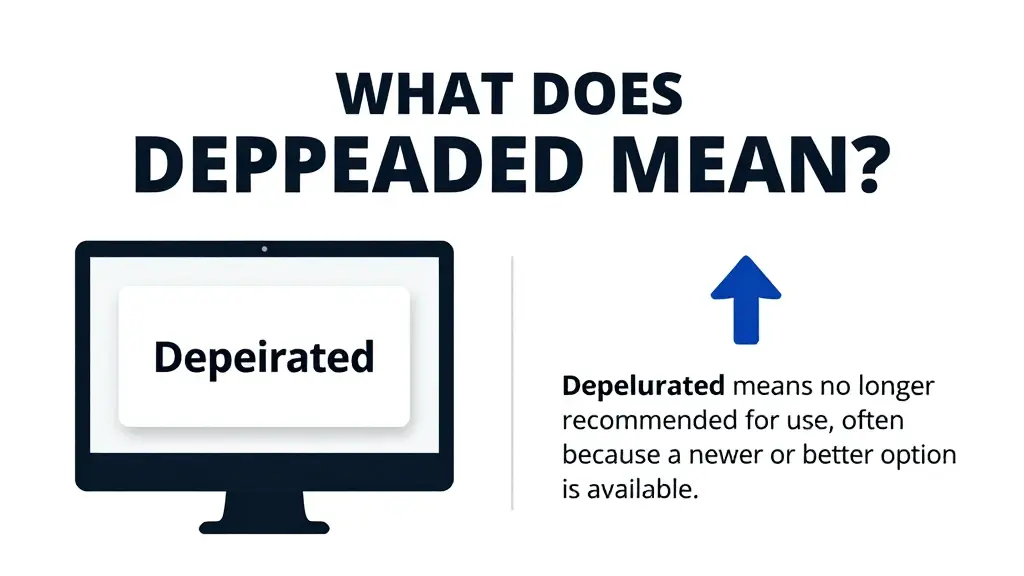
Deprecated means something is no longer recommended for use because a newer, better, or preferred option is available.
It is especially common in software and technology.
A deprecated feature may still work, but developers are warned not to use it in new projects because it may be removed or stop being supported later.
Quick Meaning Table
| Term | Meaning |
| Word | Deprecated |
| Main meaning | No longer recommended or supported for use |
| Pronunciation | DEH-pruh-kay-tid |
| Part of speech | Adjective / past form of “deprecate” |
| Common use | Software, technology, APIs, features |
| Similar words | Discouraged, outdated, obsolete |
| Example | “This function is deprecated.” |
Introduction
You may have seen the word deprecated while using software, an app, a website, an API, or a programming tool. A message may say that a feature or function is deprecated. This does not always mean that the feature is broken. Instead, it usually means that the feature is no longer recommended for new use.
The deprecated meaning is closely linked to the idea of moving away from an older option. A newer or better replacement may already exist. The old option might continue working for some time, but developers may stop improving it or remove it in a future update.
In simple English, deprecated means “still available, but no longer recommended.”
What Does Deprecated Mean?
Deprecated means that something is no longer recommended for use, usually because a newer or better alternative is available.
The word is very common in technology.
For example:
“This API method is deprecated.”
This means the method may still work, but developers should use another method instead.
A deprecation warning often gives users or developers time to move from the old option to the newer one before the old option is removed.
Deprecated Meaning in Simple Words
In simple words, deprecated means “old and no longer recommended.”
Imagine a software program has two ways to perform the same task:
- Old method: still works but is deprecated
- New method: recommended for current and future use
The old method has not necessarily stopped working. It is simply being phased out.
A simple way to remember it is:
Deprecated = You can still use it, but you should probably switch to something newer.
Deprecated Meaning in Technology
In technology, deprecated has a very specific and common meaning.
A software feature, function, API, command, library, or method may be marked as deprecated when its developers no longer recommend using it.
For example:
“The old login method has been deprecated.”
This usually means a newer login method should be used instead.
Deprecation can happen for several reasons:
- A better feature has been created.
- The old feature is difficult to maintain.
- The old method has security concerns.
- The software has changed.
- A newer standard has replaced the old one.
- Developers want to simplify the system.
A deprecated feature may continue working for a period of time.
What Does Deprecated Mean in Programming?
In programming, deprecated means that a programming feature, function, class, method, or API is no longer recommended for new code.
For example:
This function is deprecated.
Use the newFunction() method instead.
This warning tells the programmer that another option should be used.
The old function may still work, but relying on it can cause problems later if it is removed from a future version.
Deprecated vs. Removed
These two words are not the same.
Deprecated means:
It is still available but no longer recommended.
Removed means:
It is no longer available.
This difference is important when working with software.
Deprecated Meaning in APIs
The word deprecated is very common with APIs.
An API may mark an old endpoint, method, or parameter as deprecated when developers want users to move to a newer version.
For example:
“API version 1 is deprecated. Please use API version 2.”
This means version 1 may continue working for a while, but developers should move their projects to version 2.
A deprecated API can eventually be removed.
Deprecated Meaning in Software
Software companies may deprecate features when they want users to move toward newer tools.
For example, an application might display:
“This feature is deprecated and may be removed in a future release.”
The message tells the user that the feature is no longer part of the preferred path for the software.
It does not automatically mean that the feature is currently broken.
Deprecated Meaning in Apps and Websites
You may also see deprecated in apps and websites.
A website developer might receive a message such as:
“This browser feature is deprecated.”
This means the feature is an older technology that developers are encouraged to replace with a newer approach.
Similarly, an app may continue supporting an older option while encouraging users to switch to a newer one.
How to Pronounce Deprecated
Deprecated is commonly pronounced:
DEH-pruh-kay-tid
IPA:
/ˈdep.rə.keɪ.tɪd/
Break it into parts:
DEH + pruh + KAY + tid
The related verb deprecate is pronounced differently because it has two syllables:
DEP-ri-kayt
So:
- Deprecate → verb
- Deprecated → past form/adjective
Origin of Deprecated
The word deprecated comes from the verb deprecate, which comes from Latin deprecari, meaning to pray or ask to avoid something.
Over time, deprecate developed meanings connected with expressing disapproval or discouraging something.
In modern technology, deprecated developed a more specific meaning: something is discouraged from further use because it is outdated or has been replaced by another option.
How to Use Deprecated in a Sentence
Here are natural examples of deprecated:
- This function has been deprecated.
- The old API is now deprecated.
- You should not use deprecated methods in new code.
- The developer replaced the deprecated feature with a newer option.
- This command is deprecated in the latest version.
- The documentation warns users about deprecated features.
- The old system is deprecated but still works.
- We need to replace this deprecated library.
- The software will eventually remove the deprecated feature.
- The developer received a warning about using a deprecated method.
Conversation Examples
Conversation 1
Alex: Why am I getting this warning?
Sam: That function has been deprecated.
Alex: Does it still work?
Sam: Yes, but you should use the newer function instead.
Conversation 2
Mia: What does “deprecated” mean in the documentation?
Jake: It means the old feature is no longer recommended.
Mia: So is it already removed?
Jake: No. It may still work for now.
Deprecated vs. Obsolete
These words are related, but they are not always identical.
Deprecated means something is no longer recommended, often because a newer option is available.
Obsolete means something is outdated and generally no longer useful or needed.
For example:
“This API method is deprecated.”
means you should stop using it and switch to another method.
But:
“This technology is obsolete.”
suggests that the technology is generally outdated and no longer useful.
Deprecated vs. Outdated
Outdated simply means something is old or no longer current.
Deprecated is stronger in a technical context because it often means that developers have specifically marked something as not recommended for future use.
For example:
- Outdated software = old software
- Deprecated software feature = a feature that is specifically discouraged or being phased out
Deprecated vs. Disabled
These words have different meanings.
Deprecated means:
Still available, but no longer recommended.
Disabled means:
Turned off or prevented from working.
A deprecated feature can still work.
A disabled feature normally cannot be used until it is enabled again.
Deprecated vs. Deleted
Deprecated does not mean deleted.
When something is deprecated, it may remain available for some time.
When something is deleted or removed, it is no longer available.
For example:
“This API is deprecated.”
means you should move away from it.
“This API has been removed.”
means you can no longer use it.
Is Deprecated a Negative Word?
Deprecated can sound negative, but it is mainly a technical warning.
It does not necessarily mean that something is bad or useless right now.
In software, a deprecated feature may have worked perfectly well in the past. Developers may simply want users to move to a newer method.
The word is mainly used to communicate:
“This is no longer the preferred choice.”
Synonyms and Similar Words
Depending on the context, words similar to deprecated include:
- Discouraged
- Outdated
- Old
- Obsolete
- Phased out
- Superseded
- Discontinued
- No longer recommended
- No longer preferred
However, these words are not always exact replacements.
In programming, no longer recommended is often the clearest simple explanation of deprecated.
Common Confusions About Deprecated
Deprecated Does Not Always Mean Broken
A deprecated feature can still work.
For example:
“This method is deprecated but still supported.”
This means the method is available, but developers should avoid using it in new projects.
Deprecated Does Not Always Mean Removed
A feature may be deprecated today and removed much later.
This gives developers time to update their code.
Deprecated Does Not Mean “Wrong”
Using a deprecated feature may not immediately cause an error.
However, continuing to use it can create future problems if the feature is eventually removed.
Is Deprecated Used Outside Technology?
Yes. Although deprecated is especially common in technology, the word can also be used more generally to describe something that is discouraged or no longer preferred.
For example:
“The old practice is now deprecated.”
However, modern technical writing uses the word very often in software documentation.
If you see deprecated in a programming message, API document, or software update, it almost always means:
“This option is no longer recommended and may be removed later.”
FAQs
1. What does deprecated mean?
Deprecated means something is no longer recommended for use. In technology, it usually means an older feature or method may still work but has been replaced or is being phased out.
2. Does deprecated mean removed?
No. Deprecated does not normally mean removed. A deprecated feature may continue to work for some time before it is eventually removed.
3. What does deprecated mean in programming?
In programming, deprecated means a function, method, API, class, or feature is no longer recommended for new code. Developers are usually encouraged to use a newer alternative.
4. What does deprecated mean in software?
It means a software feature is no longer preferred and may eventually be replaced or removed.
5. Is deprecated the same as obsolete?
Not exactly. Deprecated means something is no longer recommended, while obsolete usually means something is outdated and no longer useful or needed.
6. Can I still use something that is deprecated?
Sometimes, yes. A deprecated feature may still work, but it is usually better to switch to the recommended replacement.
7. What is the opposite of deprecated?
Depending on the context, possible opposites include recommended, supported, current, preferred, or modern.
8. What does deprecated mean in an API?
It means an API feature, endpoint, method, or version is no longer recommended and may eventually be removed. Developers should normally move to the newer alternative.
9. Is deprecated a bad thing?
Not necessarily. It is mainly a warning that something is no longer the preferred option. It may continue working even after being deprecated.
10. What is a simple synonym for deprecated?
A simple way to understand deprecated is “no longer recommended.” In some contexts, outdated or phased out may also be close.
Conclusion:
Deprecated means no longer recommended for use, especially because a newer or better option is available.
The word is very common in programming, software, APIs, and technical documentation.
A deprecated feature may still work, so it does not always mean that it has been removed or is broken.
However, users and developers are usually encouraged to move to the newer replacement.
The easiest way to remember the word is: deprecated = still available for now, but no longer the preferred choice.

Emma Parker writes clear articles about English words, phrases, definitions, and everyday expressions. She focuses on making language easy for readers to understand.