
Have you ever heard someone describe a rule, law, or punishment as “draconian” and wondered what it means? This powerful word is often used in discussions about governments, workplaces, schools, and strict regulations.
It usually appears when people feel that a rule or decision is far too harsh or severe.
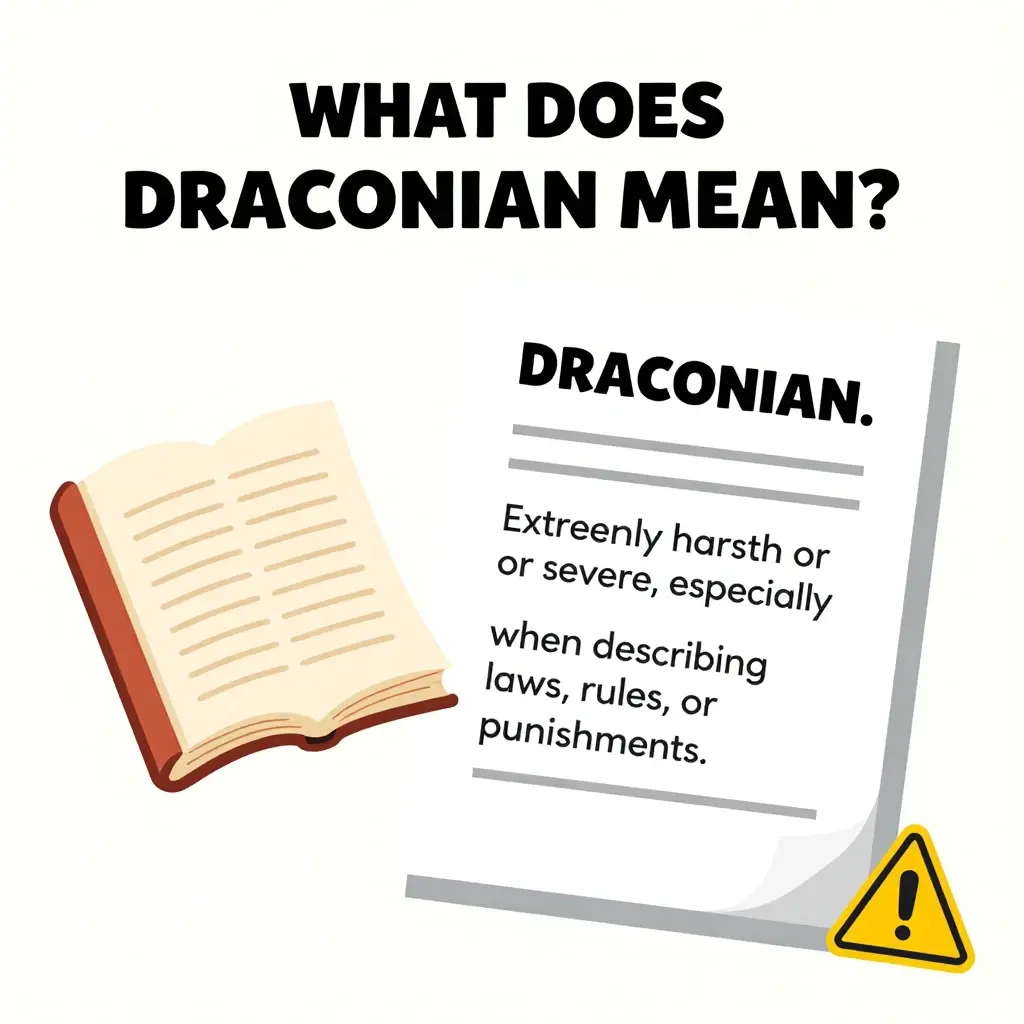
Draconian means extremely harsh, severe, or unnecessarily strict, especially when referring to laws, rules, punishments, or policies.
The word is often used to criticize actions that are considered excessive or unfair.
Quick Answer
Draconian means excessively harsh or strict, especially when describing laws, rules, punishments, or policies that seem too severe.
What Does Draconian Mean?
The word draconian is an adjective used to describe something that is very strict, cruel, or severe.
It is commonly used for:
- Laws
- Rules
- Government policies
- Workplace regulations
- Punishments
- Restrictions
Examples
- “The company introduced draconian rules that limited employees’ freedom.”
- “Critics called the new law draconian because the penalties were extremely severe.”
Where Does the Word Draconian Come From?
The word draconian comes from Draco, an ancient Greek lawmaker from Athens who lived around the 7th century BCE.
Draco became famous because his legal code was considered extremely strict and severe. Over time, his name became associated with harsh rules and punishments.
The word draconian developed from this historical reputation.
What Does Draconian Mean in Law?
In legal discussions, draconian describes laws or punishments that are considered excessively severe.
Examples:
- Very strict penalties for minor offenses.
- Laws that greatly restrict personal freedoms.
- Regulations viewed as unfair or extreme.
A person using the word usually expresses criticism.
What Does Draconian Mean in Government and Politics?
In politics, draconian is often used when discussing government actions.
It may describe:
- Strict regulations.
- Extreme restrictions.
- Severe punishments.
- Policies that reduce freedom.
Example:
“The government faced criticism for introducing draconian restrictions.”
What Does Draconian Mean in the Workplace?
In a workplace setting, draconian can describe rules that employees consider overly strict.
Examples:
- Excessive monitoring.
- Extremely rigid schedules.
- Harsh penalties for small mistakes.
- Unreasonable workplace policies.
Example:
“The manager created draconian attendance rules.”
What Does Draconian Mean in Texting?
Draconian is not common texting slang.
However, people may use it in messages when discussing strict situations.
Examples:
- “That school’s rules are draconian.”
- “These new policies feel draconian.”
What Does Draconian Mean in Love and Relationships?
Draconian is not a romantic term.
However, someone may use it to describe controlling or overly strict behavior in a relationship.
Examples:
- “Those relationship rules seem draconian.”
- “A partner shouldn’t impose draconian restrictions.”
What Does Draconian Mean in Slang?
Draconian is not slang.
It is a formal English word often used in:
- News articles
- Legal discussions
- Political debates
- Academic writing
- Everyday conversations
What Does Draconian Mean on Social Media?
On platforms like TikTok, Instagram, Reddit, X (formerly Twitter), Facebook, and YouTube, people often use draconian to discuss:
- Government policies
- School rules
- Workplace restrictions
- Online regulations
- Social issues
Examples:
- “This update has some draconian rules.”
- “People are calling the new policy draconian.”
Does Draconian Have a Spiritual Meaning?
No.
Draconian does not have a spiritual or religious meaning.
It is a historical and descriptive term related to strictness and severity.
Does Draconian Have a Cultural Meaning?
Yes.
The word carries a cultural connection to ancient Greek history because it comes from Draco’s famous legal code.
Today, it is widely understood as a symbol of:
- Extreme strictness
- Harsh authority
- Severe control
Examples and Usage
Here are examples of draconian in sentences:
Laws
“The new regulations were criticized as draconian.
School
“Students complained about the draconian dress code.”
Workplace
“The company introduced draconian security measures.”
Everyday Conversation
“Taking away all free time seems like a draconian solution.”
How Context Changes the Meaning of Draconian
| Context | Meaning |
| Law | Extremely harsh legal rules |
| Government | Severe policies or restrictions |
| Workplace | Overly strict company rules |
| School | Excessive discipline or regulations |
| Everyday use | Anything considered too harsh |
The central meaning remains excessively strict or severe.
Similar Words to Draconian
Here are some related words:
| Word | Meaning |
| Harsh | Unkind or severe |
| Severe | Very serious or strict |
| Extreme | Going beyond normal limits |
| Rigid | Not flexible |
| Oppressive | Unfairly controlling |
| Strict | Demanding obedience |
Opposite Words of Draconian
Some opposites include:
- Flexible
- Lenient
- Gentle
- Reasonable
- Moderate
- Relaxed
How to Reply When Someone Says “That’s Draconian”
If someone says:
“That rule is draconian.”
You could reply:
- “I agree, it seems overly strict.”
- “It does sound quite harsh.”
- “Maybe there should be a more balanced approach.”
Common Mistakes About Draconian
Myth 1
Draconian means related to dragons.
False.
Although it sounds similar to “dragon,” the word comes from Draco, the ancient Greek lawmaker.
Myth 2
Draconian always means illegal.
False.
A rule can be legal but still be described as draconian if people think it is too harsh.
Myth 3
Draconian means strict in a positive way.
False.
The word usually carries a negative meaning because it suggests excessive severity.
FAQs
Q1. What does draconian really mean?
A: Draconian means extremely harsh, severe, or strict, especially when describing laws, rules, or punishments.
Q2. Is draconian positive or negative?
A: It is usually negative because it suggests that something is excessively strict or unfair.
Q3. Is draconian romantic?
A: No. It is not a romantic term.
Q4. How should someone reply if a rule is called draconian?
A: You can reply, “It does seem very strict,” “I understand why people would criticize it,” or “A more balanced solution may be better.”
Q5. Is draconian commonly used on social media?
A: Yes. It is often used in discussions about politics, rules, laws, workplaces, and social issues.
Q6. How do you pronounce draconian?
A: It is commonly pronounced druh-KOH-nee-un.
Conclusion:
Draconian means extremely harsh, severe, or unnecessarily strict, especially when referring to laws, rules, punishments, or policies.
Originating from the ancient Greek lawmaker Draco, the word has become a common way to describe actions that people believe are too extreme or unfair.
Now that you understand the meaning of draconian, you’ll be able to recognize and use this word correctly in news, discussions, workplace conversations, and everyday English.
