
If you’ve heard the word Hosanna in church, a Christian song, the Bible, or during Palm Sunday celebrations, you may be wondering what it means.
Many people search for the Hosanna meaning because it is an important biblical word that expresses both praise and a cry for God’s help.
Although it appears in ancient religious texts, Christians around the world still use it in worship today.
Hosanna originally meant “save us, please” or “save us now.”
Over time, it also became an expression of joy, praise, and honor to God.
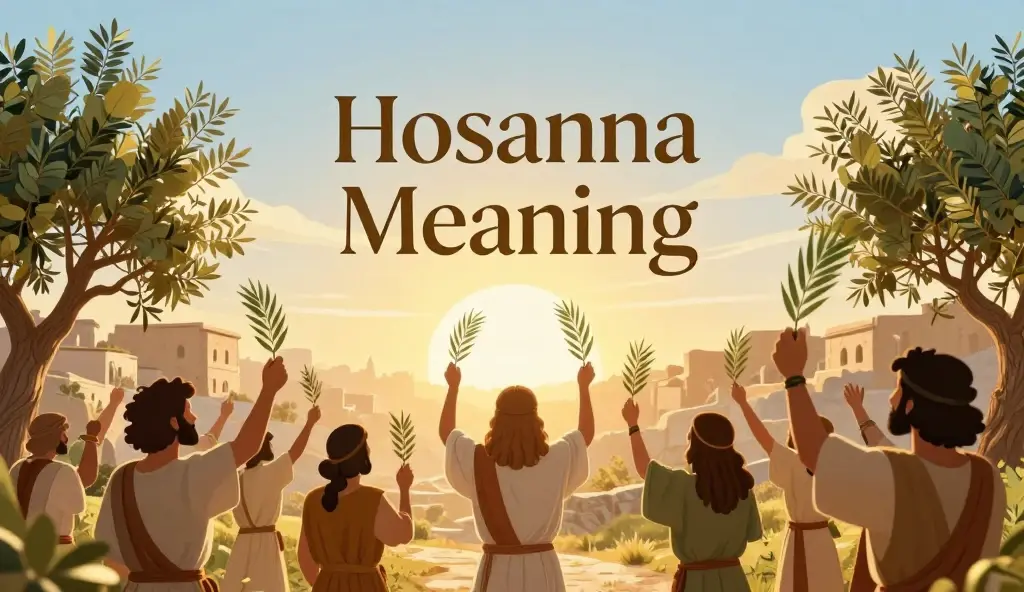
In the Bible, crowds shouted “Hosanna!” as Jesus entered Jerusalem before His crucifixion.
Today, the word is commonly used in Christian prayers, hymns, and worship services.
In this guide, you’ll learn the meaning of Hosanna, its origin, pronunciation, biblical significance, examples, and answers to common questions.
Quick Answer
Hosanna is a biblical word that originally means “save us, please” or “save us now.”
Today, it is also used as an expression of praise, worship, and honor to God, especially in Christian worship.
Quick Meaning Table
| Term | Hosanna |
| Meaning | Save us, please; an expression of praise to God |
| Part of Speech | Interjection / Noun |
| Pronunciation | hoh-ZAN-uh |
| Origin | Hebrew |
| Common Usage | Bible, Christianity, worship, hymns |
| Example | “The crowd shouted, ‘Hosanna!’ as Jesus entered Jerusalem.” |
What Does Hosanna Mean?
Hosanna originally meant “save us, please.”
In the Bible, it was a prayer asking God for salvation or deliverance.
Over time, the word also became a joyful expression of praise, thanksgiving, and worship.
Today, when Christians say “Hosanna,” they are often praising God and recognizing His power and goodness.
Hosanna Meaning in Simple Words
In simple English, Hosanna means:
- Please save us.
- Praise God.
- Honor to God.
The exact meaning depends on the context, but it is always connected with faith, worship, and hope.
Different Meanings of Hosanna
In the Bible
In the Bible, Hosanna was first used as a prayer asking God for help and salvation.
Later, it became a joyful shout welcoming Jesus as the promised Messiah.
In Christianity
Today, Christians use Hosanna during worship to praise God and Jesus.
It appears in many hymns, worship songs, and church services.
In Worship Music
Many Christian songs include the word Hosanna as a way of expressing love, gratitude, and praise to God.
Hosanna in the Bible
One of the best-known uses of Hosanna is during Jesus’ triumphal entry into Jerusalem.
According to the Gospels, the crowd welcomed Jesus by shouting:
“Hosanna! Blessed is he who comes in the name of the Lord!”
This was both a joyful greeting and a declaration of hope that God would bring salvation through Jesus.
Hosanna Meaning in Christianity
For Christians, Hosanna is more than a historical word.
It reminds believers of:
- God’s saving power
- Jesus as the Messiah
- Joyful worship
- Hope and faith
- Thanksgiving
Because of this, the word is often sung during church services, especially on Palm Sunday.
Spiritual Meaning of Hosanna
Spiritually, Hosanna represents:
- Trust in God
- A prayer for help
- Gratitude
- Worship
- Hope
- Faith in God’s salvation
For many believers, saying Hosanna is both a prayer and an act of praise.
How to Pronounce Hosanna
Pronunciation:
hoh-ZAN-uh
The stress is placed on the second syllable:
hoh – ZAN – uh
Origin of Hosanna
The word Hosanna comes from the Hebrew expression “Hoshi’ah na,” which means “please save” or “save us now.”
It later passed into Greek in the New Testament and then into English through Bible translations.
Although its original meaning was a request for salvation, it gradually became an expression of joyful praise in Christian worship.
How to Use Hosanna in a Sentence
Here are some examples.
- The choir sang “Hosanna” during the Palm Sunday service.
- Children shouted “Hosanna!” as part of the church celebration.
- The hymn begins with the word Hosanna.
- Christians around the world sing Hosanna in worship.
- The crowd welcomed Jesus with cries of Hosanna.
- Hosanna reminds believers of God’s saving power.
- The pastor explained the meaning of Hosanna.
- We heard the congregation singing Hosanna together.
- The worship song ended with joyful cries of Hosanna.
- Palm Sunday services often include the word Hosanna.
Conversation Examples
Conversation 1
Emma: What does Hosanna mean?
Sarah: It originally means “save us, please,” but today it’s also used as a joyful expression of praise to God.
Conversation 2
Ali: Why do people sing Hosanna in church?
Ahmed: Because it’s a biblical word used to worship and honor God.
Synonyms and Similar Words
Although Hosanna has no exact synonym, related expressions include:
- Praise the Lord
- Hallelujah
- Glory to God
- Blessed be the Lord
- Worship
Each has a different meaning, but all are connected with worship and praise.
Common Confusions
Hosanna vs. Hallelujah
Hosanna originally means “save us, please” and later became a word of praise.
Hallelujah means “Praise the Lord.”
Both are used in Christian worship, but they are not interchangeable in every context.
Hosanna vs. Amen
Amen means “so be it” or “truly.”
Hosanna is a prayer for salvation and an expression of praise.
Is Hosanna Offensive?
No.
Hosanna is a sacred and respectful word in Christianity. It is used in worship, prayer, Bible readings, and hymns. When using the word, it is best to do so respectfully because it has deep religious significance for many believers.
FAQs
Q1. What does Hosanna really mean?
A: Hosanna originally means “save us, please” or “save us now.” Today, it is also used as an expression of praise and worship to God.
Q2. Is Hosanna a prayer?
A: Yes. Originally, it was a prayer asking God for salvation. Today, it is also used as a joyful expression of praise.
Q3. Is Hosanna the same as Hallelujah?
A: No. Hosanna originally means “save us,” while Hallelujah means “Praise the Lord.”
Q4. Why did people shout Hosanna to Jesus?
A: They believed Jesus was the promised Messiah and welcomed Him with praise while expressing hope for God’s salvation.
Q5. How do you pronounce Hosanna?
A: It is commonly pronounced hoh-ZAN-uh.
Q6. Is Hosanna only used by Christians?
A: No. It is most commonly associated with Christianity today, but its roots are in the Hebrew language and Jewish scripture.
Q7. Is Hosanna mentioned in the Bible?
A: Yes. It appears in the Gospels during Jesus’ triumphal entry into Jerusalem.
Q8. Why is Hosanna important on Palm Sunday?
A: Palm Sunday commemorates Jesus entering Jerusalem, where the crowds welcomed Him by shouting “Hosanna.”
Q9. Can Hosanna be used in everyday conversation?
A: It is mainly used in religious settings, worship services, songs, and discussions about the Bible.
Q10. Is Hosanna a positive word?
A: Yes. Hosanna expresses hope, praise, worship, and trust in God.
Conclusion:
The Hosanna meaning combines both a prayer for salvation and an expression of joyful praise.
Originally meaning “save us, please,” the word became a powerful declaration of worship as people welcomed Jesus into Jerusalem.
Today, Christians around the world continue to sing and say Hosanna in church services, hymns, and prayers.
Understanding its biblical background helps you appreciate its deep spiritual and historical significance.
