

Have you ever heard someone say there was “animosity between two people” or read about animosity in a news article or novel? The word often appears when describing conflicts, disagreements, or long-standing resentment.
While it sounds formal, animosity is a common English word used in everyday conversations, workplaces, relationships, and politics.
Animosity means strong dislike, hostility, or resentment toward someone or a group.
It describes negative feelings that often develop because of disagreements, unfair treatment, competition, or past conflicts. Depending on the situation, animosity can be expressed openly or remain hidden.
Quick Answer
Animosity means strong hostility, resentment, or deep dislike toward someone or something.
It refers to negative feelings that often arise from conflict or disagreement.
What Does Animosity Mean?
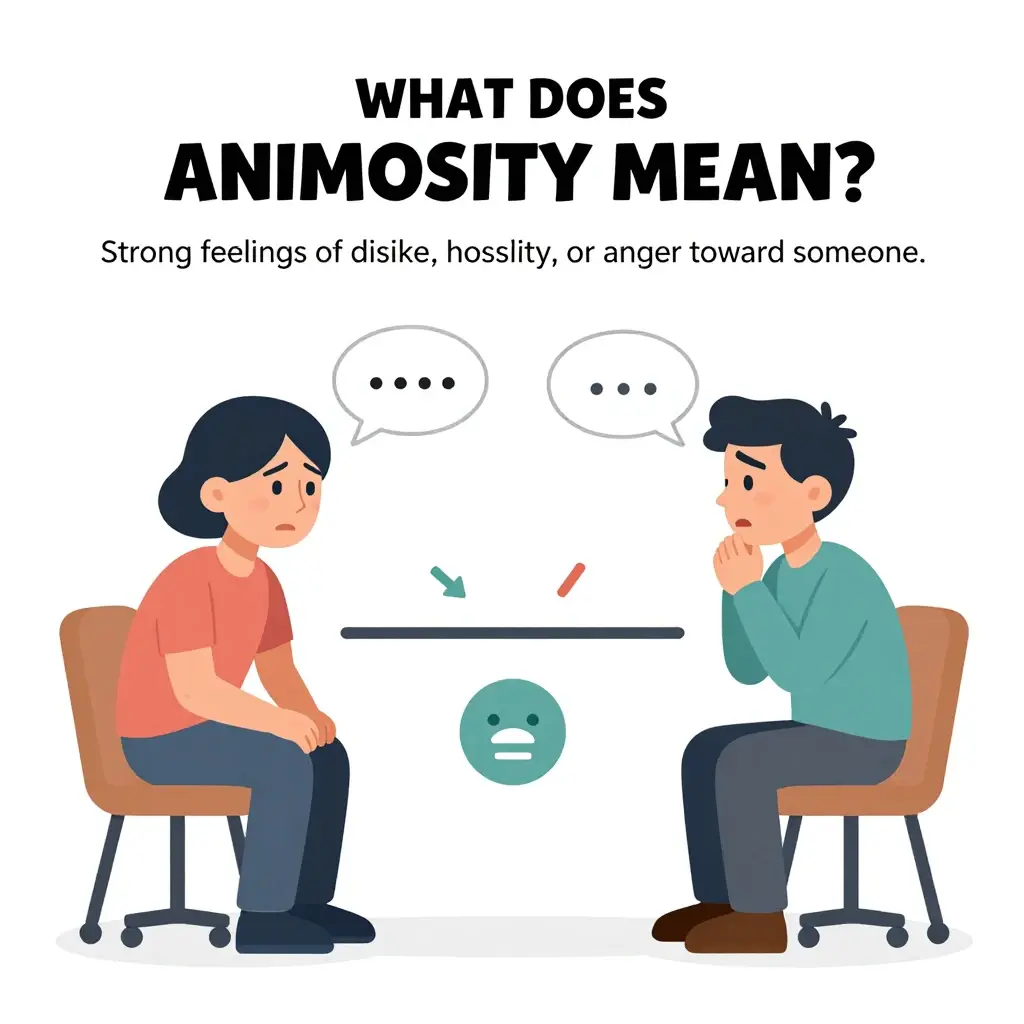
Animosity is a noun that describes intense unfriendly feelings between people or groups.
It often involves:
- Hostility
- Resentment
- Bitterness
- Ill will
- Hatred (in stronger cases)
Unlike a brief disagreement, animosity usually suggests ongoing negative feelings.
Examples
- “There was obvious animosity between the two coworkers.”
- “Years of competition created animosity between the teams.”
What Does Animosity Mean in Everyday Life?
In everyday conversations, animosity describes situations where people strongly dislike each other.
Common causes include:
- Personal arguments
- Family disputes
- Workplace conflicts
- Rivalries
- Past misunderstandings
Example
- “Despite working together, they still felt animosity toward each other.”
What Does Animosity Mean in Relationships?
In relationships, animosity refers to deep resentment or hostility between partners, friends, or family members.
Examples
- “After the breakup, there was still animosity between them.”
- “Unresolved arguments created animosity in the family.”
Healthy communication can often help reduce animosity before it grows into lasting resentment.
What Does Animosity Mean in Texting?
Although animosity is not commonly used in casual texting, people may use it when discussing serious conflicts.
Examples
- “There’s no animosity between us anymore.”
- “I don’t want any animosity.”
The word emphasizes that someone wants to avoid or acknowledge hostile feelings.
What Does Animosity Mean in Slang?
Animosity is not slang.
It is a standard English word used in both formal and informal contexts.
What Does Animosity Mean on Social Media?
On platforms like TikTok, Instagram, X (formerly Twitter), Reddit, and Facebook, animosity often appears in discussions about:
- Celebrity feuds
- Political disagreements
- Sports rivalries
- Online arguments
- Public controversies
Example:
- “There’s a lot of animosity in the comments section.”
Does Animosity Have a Spiritual Meaning?
Animosity itself does not have a spiritual meaning, but many religions and philosophies encourage people to overcome hostility through:
- Forgiveness
- Compassion
- Reconciliation
- Peace
In these teachings, letting go of animosity is often seen as a step toward healthier relationships and inner peace.
Does Animosity Have a Cultural Meaning?
Yes.
Different cultures may express or handle animosity in different ways. Some encourage open discussion to resolve conflict, while others value indirect communication and reconciliation to maintain harmony.
Regardless of culture, animosity generally refers to persistent negative feelings.
Examples and Usage
Here are some examples of animosity in everyday English.
Workplace
“There was animosity between the two departments.”
Family
“The siblings eventually put their animosity behind them.”
Sports
“The rivalry created years of animosity between the fans.”
Politics
“The debate increased animosity between the opposing groups.”
How Context Changes the Meaning of Animosity
| Context | Meaning |
| Relationships | Deep resentment between people |
| Workplace | Hostility among coworkers |
| Politics | Strong opposition between groups |
| Sports | Intense rivalry |
| Everyday conversation | Lasting dislike or bitterness |
The core meaning remains strong hostility or resentment.
Similar Words to Animosity
Here are some related words:
| Word | Meaning |
| Hostility | Open unfriendliness |
| Resentment | Lingering bitterness |
| Hatred | Extreme dislike |
| Bitterness | Deep emotional resentment |
| Ill will | Unfriendly feelings |
| Antagonism | Active opposition or hostility |
While similar, each word carries its own level of intensity and nuance.
How to Reply When Someone Says “There’s No Animosity”
If someone says:
“There’s no animosity between us.”
You could reply:
- “I’m glad to hear that.”
- “That’s good—we can move forward.”
- “I appreciate clearing the air.”
If someone says there is animosity, it’s often helpful to listen calmly and seek constructive ways to resolve the issue.
Common Mistakes About Animosity
Myth 1
Animosity only means anger.
False.
Anger is often temporary, while animosity usually refers to deeper, long-lasting hostility or resentment.
Myth 2
Animosity always leads to conflict.
False.
Someone may feel animosity without expressing it openly.
Myth 3
Animosity and disagreement are the same.
False.
People can disagree respectfully without feeling animosity. Animosity involves stronger negative emotions.
FAQs
Q1. What does animosity really mean?
A: Animosity means strong hostility, resentment, or deep dislike toward someone or something.
Q2. Is animosity positive or negative?
A: Animosity has a negative meaning because it describes hostile or resentful feelings.
Q3. Is animosity romantic?
A: No. It is not a romantic term. It refers to negative emotions that can sometimes arise in relationships.
Q4. How should someone reply if another person mentions animosity?
A: Respond calmly and respectfully. If appropriate, acknowledge their feelings and focus on understanding or resolving the issue.
Q5. Is animosity commonly used on social media?
A: Yes. It is often used in discussions about rivalries, public disputes, political debates, and celebrity conflicts.
Q6. How do you pronounce animosity?
A: It is commonly pronounced an-uh-MOSS-uh-tee.
Conclusion:
Animosity means strong hostility, resentment, or deep dislike toward a person or group.
It often develops from unresolved conflicts, competition, or past experiences and can appear in relationships, workplaces, politics, and everyday life.
Unlike a simple disagreement, animosity usually suggests lasting negative feelings.
Now that you understand the meaning of animosity, you’ll be able to recognize and use the word accurately in conversations, books, news articles, and discussions about conflict.

Zachary Wilson is an American language writer who specializes in word meanings, online slang, abbreviations, and practical English usage for modern audiences.