

Have you ever felt overwhelmed by loud noises, bright lights, crowded places, or too many things happening at once? If so, you may have experienced being overstimulated.
The term has become increasingly popular on social media, especially on TikTok, Instagram, and mental health discussions, where people use it to describe feeling mentally or emotionally overwhelmed.
Overstimulated means receiving more sensory, mental, or emotional input than your brain can comfortably process.
This can make you feel stressed, anxious, irritated, exhausted, or unable to focus.
While anyone can become overstimulated from time to time, it is also a common experience for some people in certain situations, such as busy environments or after prolonged periods of activity.
Quick Answer
Overstimulated means feeling overwhelmed because your brain is processing too much sensory, emotional, or mental information at once.
Common causes include loud environments, bright lights, constant notifications, multitasking, or emotional stress.
What Does Overstimulated Mean?
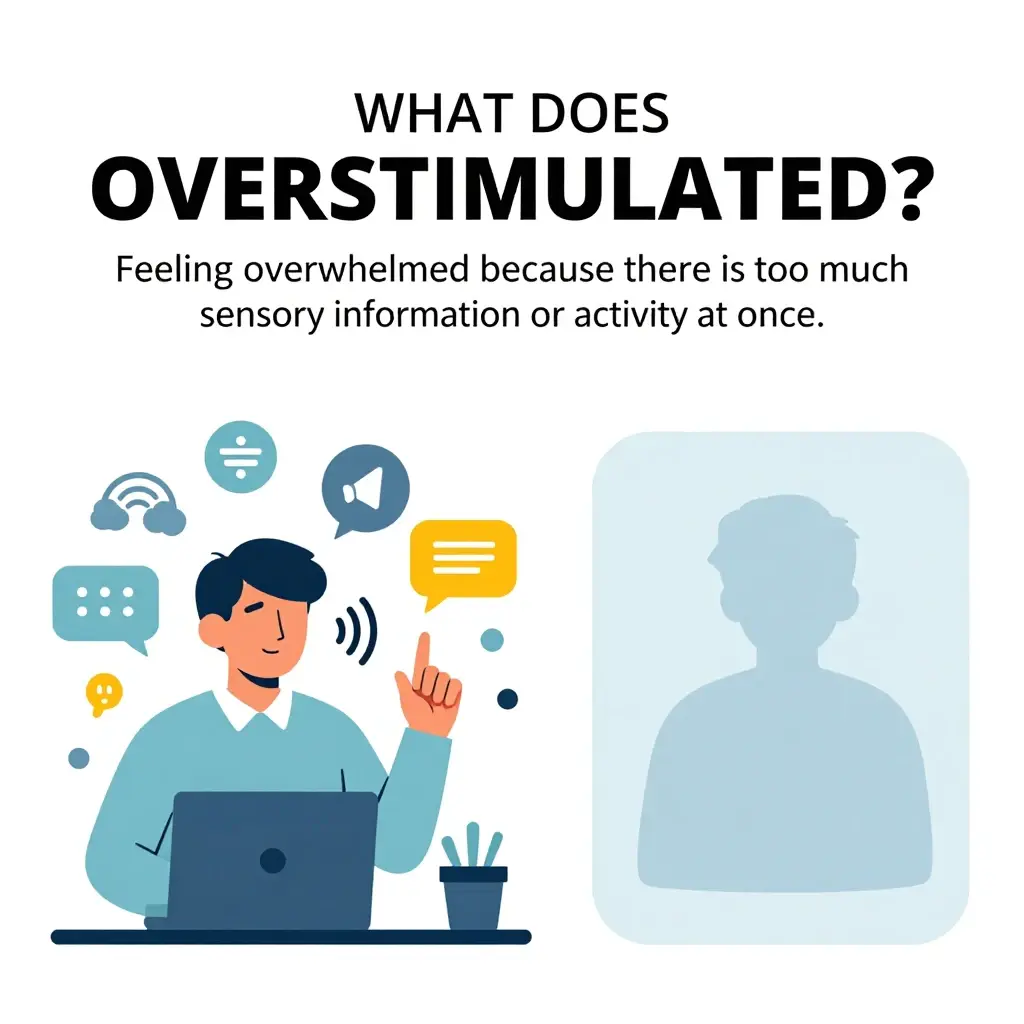
Being overstimulated means your mind or senses have taken in more information than they can comfortably handle.
This overload can come from:
- Loud sounds
- Bright lights
- Busy crowds
- Too much screen time
- Strong emotions
- Constant interruptions
- Too many tasks at once
As a result, you may feel mentally drained or emotionally overwhelmed.
Examples
- “After spending hours at the concert, I felt completely overstimulated.”
- “The busy shopping mall was so noisy that I became overstimulated.”
What Does Overstimulated Mean in Texting?
In text messages, overstimulated is commonly used to explain why someone feels overwhelmed or needs a break.
Examples
- “I’m feeling overstimulated. I’ll reply later.”
- “Today has been so busy—I just need some quiet.”
The word honestly communicates that someone needs time to recharge.
What Does Overstimulated Mean in Love and Relationships?
In relationships, someone may say they feel overstimulated when they’re emotionally or mentally overwhelmed—not necessarily because of their partner, but because of everything happening around them.
Examples
- “I’m overstimulated after work. Can we talk later tonight?”
- “I need a little quiet time before we continue this conversation.”
Understanding and respecting these feelings can support healthy communication.
What Does Overstimulated Mean in Slang?
Overstimulated is not slang, but it has become a popular everyday term online.
People often use it casually to describe situations such as:
- Too much social interaction.
- Endless notifications.
- Crowded events.
- Long workdays.
- Sensory overload.
What Does Overstimulated Mean on Social Media?
On platforms like TikTok, Instagram, Snapchat, Reddit, and X (formerly Twitter), people use overstimulated to describe feeling overwhelmed by:
- Loud environments
- Busy schedules
- Parenting responsibilities
- Social events
- Digital overload
- Emotional stress
Examples
- “I’ve had three meetings, answered 100 messages, and now I’m completely overstimulated.”
- “I love concerts, but afterward I’m always overstimulated.”
The term is often used to encourage self-care and taking breaks.
Does Overstimulated Have a Spiritual Meaning?
No.
Overstimulated does not have a recognized spiritual meaning.
However, some people discuss overstimulation in spiritual or mindfulness contexts, encouraging practices like:
- Meditation
- Prayer
- Quiet reflection
- Spending time in nature
These are personal coping strategies rather than definitions of the word.
Does Overstimulated Have a Medical or Psychological Meaning?
Yes.
Overstimulation can occur in many people and may result from stress, fatigue, or intense environments. It is also discussed in psychology and healthcare contexts, particularly in relation to sensory processing and emotional regulation.
Feeling overstimulated does not automatically mean someone has a medical condition. However, if it happens frequently or seriously affects daily life, it’s a good idea to speak with a qualified healthcare professional.
Common Signs of Being Overstimulated
People may experience:
- Difficulty concentrating
- Irritability
- Feeling anxious
- Mental exhaustion
- Wanting to be alone
- Sensitivity to noise or light
- Trouble making decisions
- Feeling emotionally overwhelmed
Everyone experiences overstimulation differently.
Common Causes of Overstimulation
Some common causes include:
- Loud music
- Crowded places
- Bright lights
- Too much screen time
- Constant phone notifications
- Multitasking
- Stressful situations
- Lack of sleep
Recognizing your personal triggers can help you manage them.
How to Cope With Feeling Overstimulated
If you’re feeling overstimulated, these strategies may help:
- Move to a quieter space.
- Reduce screen time for a while.
- Take slow, deep breaths.
- Drink some water.
- Listen to calming music.
- Take a short walk.
- Get enough rest.
- Limit unnecessary distractions.
If overstimulation is frequent or severe, consider discussing it with a healthcare professional.
Examples and Usage
Here are some everyday examples of being overstimulated.
Work
“I’ve been in meetings all day and feel overstimulated.”
School
“The noisy classroom made me feel overstimulated.”
Family
“After the birthday party, the kids were overstimulated.”
Social Media
“I need a phone break—I’m completely overstimulated.”
How Context Changes the Meaning of Overstimulated
| Context | Meaning |
| Work | Too much mental activity |
| School | Sensory or mental overload |
| Relationships | Emotional overwhelm |
| Social media | Digital overload |
| Crowded places | Sensory overload |
| Everyday conversation | Feeling mentally or emotionally overwhelmed |
Although the cause may differ, the core meaning remains having more stimulation than you can comfortably process.
Similar Words to Overstimulated
Here are some related words:
| Word | Meaning |
| Overwhelmed | Feeling unable to cope with demands |
| Stressed | Under mental or emotional pressure |
| Exhausted | Extremely tired |
| Overloaded | Too much information or work |
| Burned out | Emotionally or mentally drained after prolonged stress |
| Frazzled | Feeling tense and disorganized |
These words are related but do not always mean exactly the same thing.
How to Reply When Someone Says They’re Overstimulated
If someone tells you they’re overstimulated, a supportive response might be:
- “Take your time.”
- “No worries, we can talk later.”
- “I hope you get some rest.”
- “Let me know if you need anything.”
Showing patience and understanding can be helpful.
Common Mistakes About Overstimulation
Myth 1
Only children become overstimulated.
False.
People of all ages can experience overstimulation.
Myth 2
Being overstimulated always means someone has a medical condition.
False.
Anyone can feel overstimulated occasionally because of stress or their environment.
Myth 3
Overstimulation is the same as being tired.
False.
Fatigue can contribute to overstimulation, but overstimulation specifically involves feeling overwhelmed by sensory, mental, or emotional input.
FAQs
Q1. What does overstimulated really mean?
A: Overstimulated means feeling overwhelmed because your brain is processing too much sensory, mental, or emotional information at once.
Q2. Is overstimulated positive or negative?
A: It is generally a negative term because it describes feeling overwhelmed or uncomfortable.
Q3. Is overstimulated romantic?
A: No. It is not a romantic term, although someone may use it to explain why they need space or quiet in a relationship.
Q4. How should someone reply if a person says they’re overstimulated?
A: You can reply, “Take your time,” “Get some rest,” “We can talk later,” or “I understand.”
Q5. Is overstimulated commonly used on social media?
A: Yes. It is widely used in discussions about mental wellness, parenting, work, and everyday stress.
Q6. How do you pronounce overstimulated?
A: It is commonly pronounced OH-ver-STIM-yuh-lay-tid.STIM-yuh-lay-tid (/ˌoʊ.vɚˈstɪm.jə.leɪ.tɪd/).
Conclusion:
Overstimulated means feeling overwhelmed because your brain is processing more sensory, mental, or emotional input than it can comfortably handle.
It can happen after spending time in loud environments, dealing with constant notifications, managing stressful situations, or juggling too many tasks at once.
While occasional overstimulation is common, recognizing the signs and taking steps to reduce stress and sensory input can help you feel more balanced.
Now that you understand the meaning of overstimulated, you’ll be able to recognize the term in conversations, social media, and everyday life and understand what someone means when they say they’re feeling overwhelmed.

Brandon Lewis researches modern vocabulary and semantic trends to create informative, reader-focused language guides.